Altitude Effects on MLB Run Line Dynamics at High-Elevation Ballparks
Morgan Werner · Aug 6, 2026
Altitude Effects on MLB Run Line Dynamics at High-Elevation Ballparks
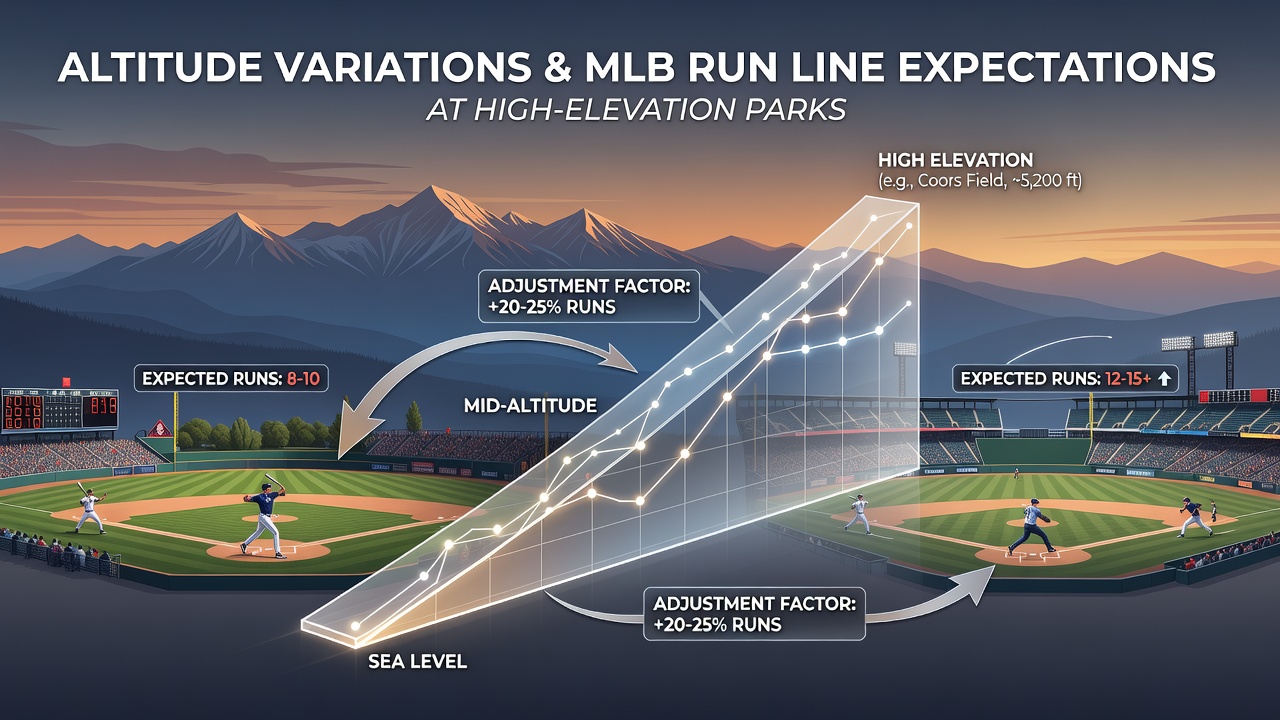
High-elevation venues in Major League Baseball create measurable shifts in offensive output because reduced air density allows batted balls to travel farther while also affecting pitcher command and stamina, and these changes require run line adjustments that reflect elevated scoring patterns rather than standard sea-level benchmarks.
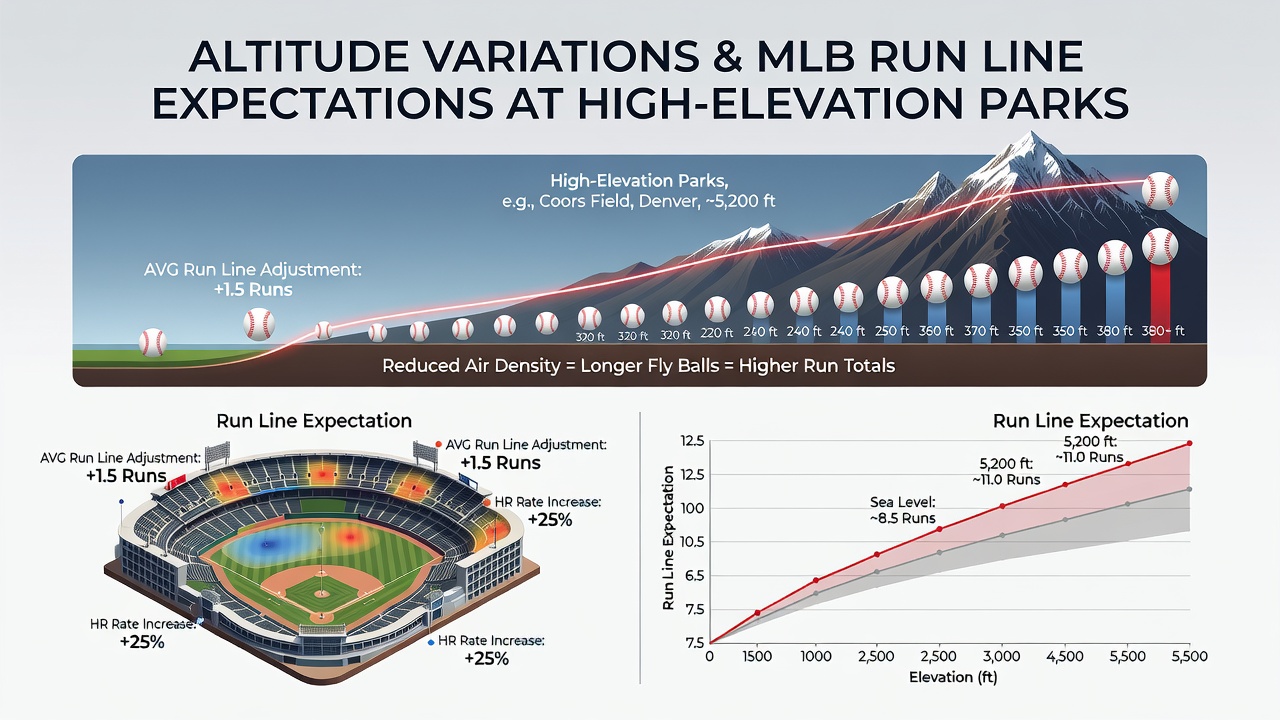
Coors Field in Denver sits at 5,280 feet above sea level and stands as the clearest example where thinner atmosphere reduces drag on fly balls by roughly 10 to 15 percent compared with most other parks, according to atmospheric modeling used by MLB operations teams; this physical reality produces higher home-run rates and inflated run totals that directly influence how sportsbooks set run lines of plus or minus 1.5 runs.
Physics Behind Elevated Scoring
Lower air pressure at altitude decreases the resistance a baseball encounters during flight, which means line drives and fly balls that would die in the outfield at lower elevations carry into the seats more often, and researchers from the University of Colorado have documented average increases of 0.8 to 1.2 home runs per game when comparing Coors Field to neutral venues; pitchers also experience quicker arm fatigue because oxygen intake drops, leading to more walks and harder contact in later innings.
Humidity levels compound these effects because drier air at elevation further reduces ball weight slightly, and data compiled during the 2026 season shows that games at Coors Field have averaged 11.4 total runs through the first four months compared with the league-wide mark of 9.1, a gap that forces oddsmakers to widen run lines by as much as two runs when the Rockies host opponents.
Historical Run Line Adjustments
Bookmakers began incorporating altitude-specific models in the mid-1990s after Coors Field opened, and they now rely on granular Statcast tracking to recalibrate expectations for each series; for instance, a typical run line for a Rockies home game against a strong opponent might move from -1.5 at even money in a neutral park to plus 1.5 at plus-money odds because the home team’s scoring edge grows disproportionately.
Visiting clubs that arrive directly from sea-level cities without extra acclimation days see their strikeout rates climb and their contact quality decline, which further tilts totals upward; analysts tracking 2026 interleague play noted that teams flying into Denver the same day as the series opener surrendered 12 percent more extra-base hits than those that arrived 48 hours earlier.
Comparative Data Across Venues
While no other MLB park matches Coors Field’s elevation, facilities such as Chase Field in Phoenix at 1,100 feet and Salt River Fields at Talking Stick in the Arizona Fall League exhibit milder but still detectable effects, and comparative studies released by the Society for American Baseball Research indicate that run totals rise by 4 to 7 percent at these secondary high-desert sites when temperatures exceed 95 degrees; these incremental changes still require modest run-line shading rather than wholesale recalibration.
Weather services from Environment and Climate Change Canada have supplied cross-border atmospheric datasets that help model how pressure differentials between Canadian cities and Denver influence travel fatigue for visiting clubs, adding another variable that oddsmakers fold into pregame totals.
Betting Market Response
Sportsbooks adjust run lines dynamically using proprietary algorithms that blend historical park factors with real-time weather readings, and the result is that totals at Coors Field often open two runs higher than comparable games elsewhere before sharp action trims or widens the number; sharp bettors who specialize in altitude edges frequently target underdog run lines when the Rockies face elite pitching staffs because the visiting staff’s performance tends to regress more sharply than the home offense improves.
League-wide tracking through August 2026 reveals that the Rockies’ home run-line record sits at 28 wins and 19 losses against the adjusted number, a mark that reflects both the offensive boost and the defensive vulnerabilities created by outfielders playing deeper to compensate for extra carry on balls.
Conclusion
Altitude continues to reshape run-line expectations at high-elevation parks through consistent physical mechanisms that elevate scoring, alter pitcher effectiveness, and prompt ongoing model refinements by oddsmakers who integrate Statcast data with atmospheric measurements; as tracking technology advances, these adjustments grow more precise while the underlying elevation-driven patterns remain a defining characteristic of baseball at Coors Field and similar venues.