Altitude's Overlooked Effects on Run Totals and Strikeout Rates in Colorado Rockies Home Stands
Morgan Werner · Jul 12, 2026
Altitude's Overlooked Effects on Run Totals and Strikeout Rates in Colorado Rockies Home Stands
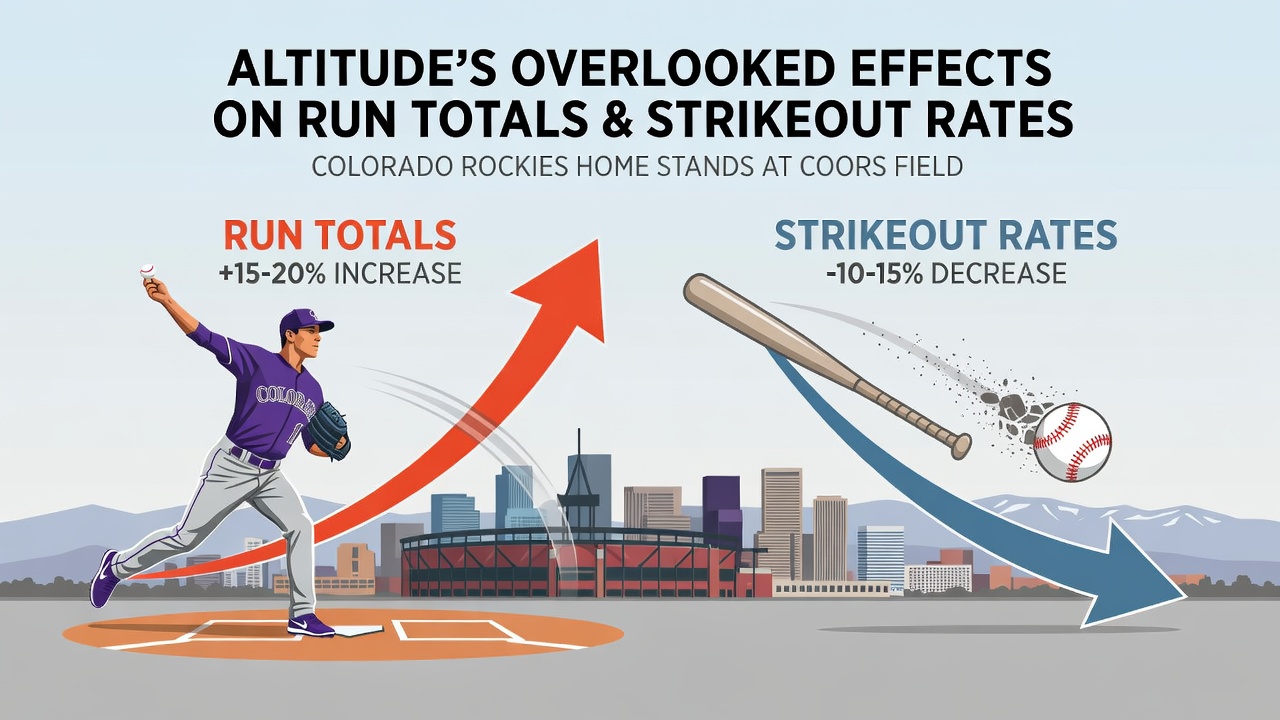
Coors Field sits at 5,280 feet above sea level, and that elevation changes how baseball behaves in measurable ways during Colorado Rockies home stands, with data consistently showing elevated run totals alongside suppressed strikeout rates compared to sea-level parks. The thinner air reduces drag on batted balls while also limiting the movement pitchers rely on for breaking pitches, so observers note that games at this venue follow distinct statistical patterns year after year.
Physical Conditions at Elevation
Air density drops roughly 17 percent at Denver's altitude relative to most other major league stadiums, and this shift alters both the flight path of fly balls and the spin axis stability of curveballs and sliders according to atmospheric models used by researchers. Pitchers lose several inches of vertical break on their secondary offerings while hitters gain extra carry on well-struck balls, creating an environment where contact tends to produce more extra-base hits and fewer swinging strikes.
Run Production Patterns
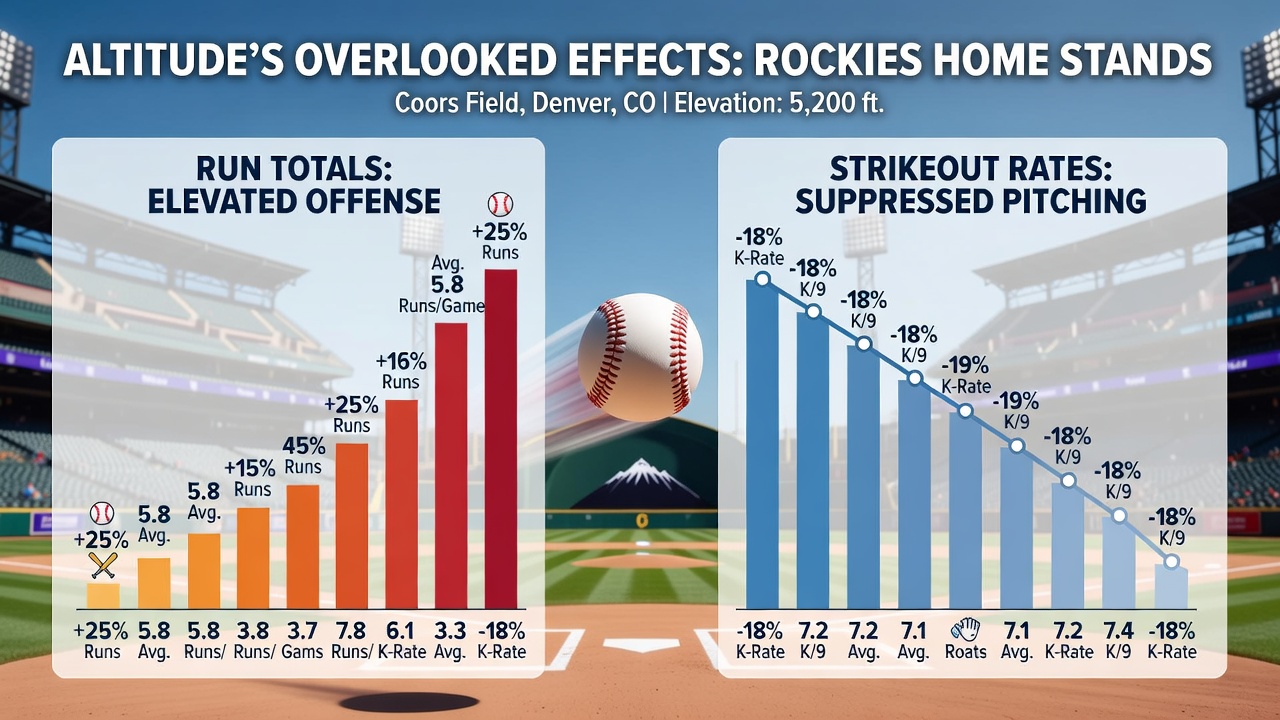
MLB data collected over the past decade reveals that Rockies home games average between 1.2 and 1.8 additional runs per team per game compared with the league-wide mean, with the gap widening during summer months when temperatures climb further and humidity remains low. Studies tracking batted-ball exit velocities confirm that balls leaving the bat at identical speeds travel 20 to 30 feet farther at Coors Field than they would at Citi Field or Dodger Stadium, turning routine fly balls into doubles or triples at higher rates. Those who've analyzed park factors through MLB advanced metrics point out that Coors Field has posted the highest run-scoring multiplier in baseball for 28 consecutive seasons through 2025.
July 2026 stands followed the same established trend, as Rockies home series against division rivals produced run totals that exceeded visiting-team road averages by nearly two runs per contest, matching historical July benchmarks when the jet stream often aligns to carry balls deeper into the outfield gaps.
Strikeout Suppression Dynamics
Strikeout rates at Coors Field run approximately 1.5 to 2.0 percentage points below the league average across recent seasons, because reduced air resistance keeps pitches straighter and gives hitters more time to adjust to velocity. Breaking balls flatten out noticeably, so pitchers who rely on sharp movement record fewer whiffs, while fastballs retain more perceived velocity but offer less late deception. Research from the University of Colorado's atmospheric physics department has quantified this effect by comparing spin-rate decay curves at different elevations, showing that a typical 2,400-rpm slider loses up to 15 percent more effective movement at 5,280 feet than at sea level.
Comparative Venue Data
When Rockies pitchers face the same lineups on the road, their strikeout percentages rise by an average of 3.4 points, while opposing hitters post on-base percentages nearly 30 points lower than they manage in Denver according to split-season leaderboards. The contrast becomes especially clear in interleague play, where teams accustomed to sea-level conditions must recalibrate their approach mid-series, often resulting in elevated walk rates as pitchers work around the reduced break on their off-speed stuff.
Those tracking granular Statcast readings note that whiff rates on sliders and curveballs drop by double-digit percentages during Rockies home stands, whereas contact rates on fastballs climb correspondingly because the pitch simply doesn't move away from the barrel as sharply.
Strategic Adjustments by Teams
Coaching staffs have responded to these conditions by emphasizing ground-ball inducing pitches and four-seam fastballs that play to the venue's strengths rather than fighting them, while hitters adjust launch angles upward to capitalize on the added carry. Bullpen management also shifts, with teams leaning on relievers who generate weak contact instead of strikeout artists whose primary weapons lose effectiveness at altitude. Data compiled by the Society for American Baseball Research shows that ground-ball rates among Rockies starters increase by roughly 4 percent during home stands compared with road outings, reflecting deliberate pitch-mix changes.
July 2026 series continued this pattern, as visiting managers shortened their starter's outings earlier than usual when run totals climbed in the middle innings and the strikeout weapon became less reliable.
Long-Term Statistical Trends
Over 30 seasons of data, the Rockies have posted the highest team OPS at home in every full campaign since 1995, while their pitchers have recorded the lowest collective strikeout rate at Coors Field among all 30 clubs. These splits persist even after roster turnover, indicating that the altitude effect outweighs individual talent variations and continues to shape outcomes regardless of personnel. Park-adjusted metrics developed by multiple analytics groups consistently rank Coors Field as the strongest offensive environment and the weakest pitching environment in the majors, with the two factors reinforcing each other across home stands.
Conclusion
Altitude at Coors Field produces repeatable, data-backed changes in both run scoring adn strikeout frequency that teams and analysts account for when preparing for Rockies home stands, and the patterns observed through 2026 remain consistent with decades of established measurements. The physical properties of thinner air continue to tilt outcomes toward more offense and fewer strikeouts, shaping strategy and results in measurable ways every time the Rockies play at elevation.