Altitude's Quiet Role in Shifting Point Spreads for High-Elevation Games
Katja Long · Jun 25, 2026
Altitude's Quiet Role in Shifting Point Spreads for High-Elevation Games
High-elevation venues have long created measurable edges in athletic competitions, and sportsbooks adjust point spreads to reflect those environmental factors without much public discussion. Researchers have tracked performance drops in visiting teams at sites above 5,000 feet, where oxygen levels fall and recovery slows, while home squads that train in those conditions maintain output closer to sea-level norms. Data from multiple leagues shows these shifts translate directly into betting lines that favor the altitude-adjusted side by margins ranging from one to three points on average.
Physiological Effects Drive Performance Gaps
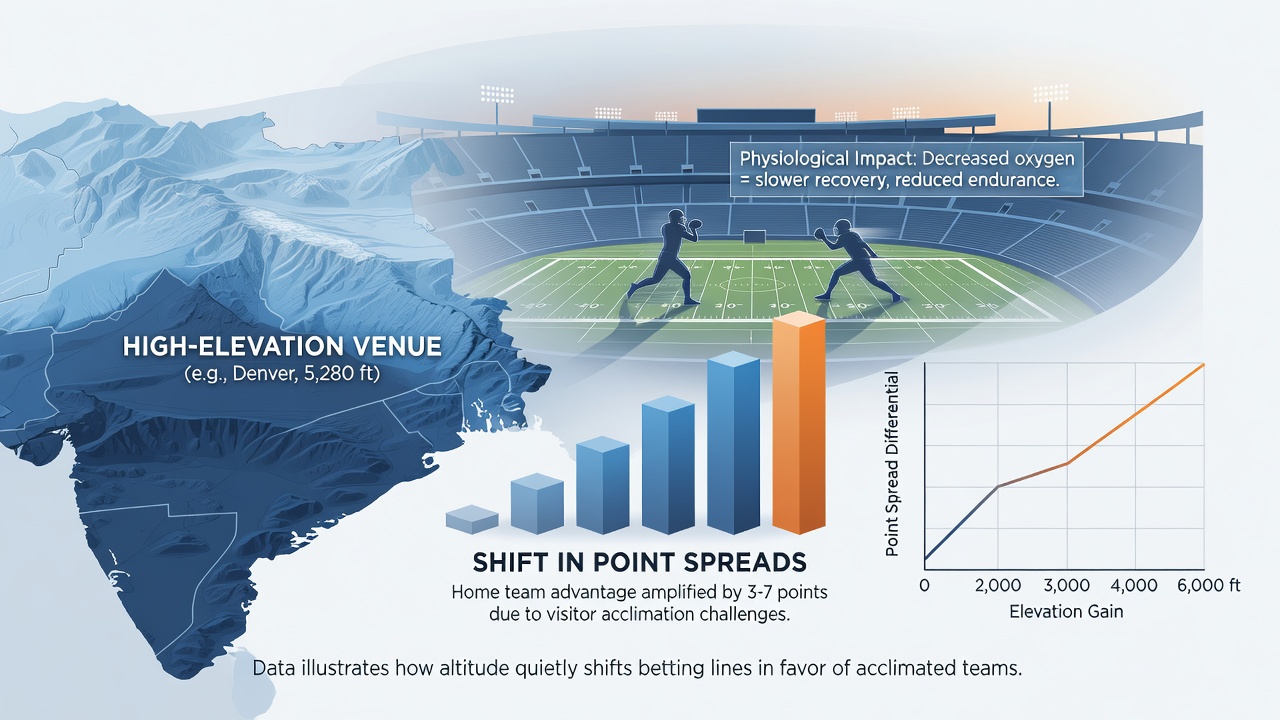
Lower air pressure reduces oxygen intake during sustained effort, which leads athletes to fatigue earlier and experience slower lactate clearance when they arrive from lower elevations. Studies from sports science programs indicate that unacclimated players lose roughly 5 to 10 percent in aerobic capacity during the first 48 hours at altitude, with the largest decrements appearing in the second half of games. Teams based at elevation build red-blood-cell adaptations over weeks or months, giving them a built-in buffer that visiting squads rarely match on short turnaround schedules.
Dehydration compounds the issue because dry mountain air accelerates fluid loss through respiration and sweat, while gastrointestinal adjustments further complicate nutrition timing for road teams. League medical staffs document elevated heart rates and reduced sprint distances in visiting athletes during the opening quarters, patterns that compound into lower total points or goals in final scorelines. These outcomes feed into historical databases that oddsmakers reference when setting initial numbers weeks in advance.
Betting Markets Incorporate Altitude Data
Point-spread models blend altitude metrics with travel distance, rest days, and recent performance trends, yet the elevation component often stays understated in public commentary. Sharp bettors monitor line movement on games in Denver, Mexico City, and similar locations because early limits frequently undervalue the home adjustment until professional money arrives. Historical NFL results at Empower Field at Mile High reveal that home teams cover the spread at rates several percentage points above their season averages, a pattern replicated across NBA contests at the Pepsi Center and international soccer matches in La Paz.
Bookmakers widen or tighten totals in tandem with spread adjustments because lower offensive production tends to cluster in high-elevation settings. June 2026 schedules include several interleague exhibitions and early-season fixtures at altitude that already show totals lines dropping by three to five points compared with neutral-site equivalents. Analysts cross-reference these figures against acclimatization windows, noting that teams arriving less than 24 hours before kickoff experience the steepest statistical declines.
League-Specific Patterns Emerge Over Time
NFL data sets spanning two decades demonstrate consistent underperformance by visiting offenses in Denver, where passing yards per attempt drop and third-down conversion rates fall below league averages. NBA tracking reveals similar dips in visitor effective field-goal percentage during back-to-back games at altitude, while soccer metrics from CONMEBOL competitions highlight reduced distance covered by away midfielders after the 60-minute mark. Each sport feeds separate proprietary models that sportsbooks refine annually using updated GPS and heart-rate data supplied by teams.
College programs in the Mountain West Conference supply additional sample sizes because weekly travel to sites like Albuquerque and Laramie creates repeated exposure across conference play. Researchers at institutions such as the University of Colorado have published longitudinal studies showing measurable VO2 max reductions that persist into the following week, influencing both injury rates and subsequent performance lines. These findings circulate among professional handicappers who layer altitude variables into multi-factor algorithms rather than treating them as isolated curiosities.
International Venues Add Complexity
Matches staged above 8,000 feet introduce steeper gradients, particularly in South American qualifiers where visiting squads from coastal nations face compounded travel and acclimatization burdens. FIFA medical reports note elevated rates of altitude-related symptoms during the opening match of tournament windows, prompting some federations to arrive five to seven days early when logistics allow. Betting markets respond with larger home-side spreads in these environments, though liquidity remains thinner than domestic leagues and line shading occurs more frequently.
Canadian and Australian sports institutes have contributed comparative data from training camps staged at simulated altitude, confirming that even short-term exposure protocols improve repeat sprint ability but rarely eliminate the full performance gap against fully adapted opponents. These cross-regional findings help global oddsmakers calibrate lines for rare neutral-site events held at elevation, such as exhibition tournaments scheduled for summer 2026.
Conclusion
Altitude continues to function as a silent variable within point-spread calculations because environmental effects produce repeatable statistical signatures across sports and continents. Leagues release performance data that feeds increasingly granular models, yet public awareness of the exact point value attached to elevation remains limited. As schedules incorporate more high-elevation dates through 2026 and beyond, the quiet calibration of spreads around these venues will stay embedded in the numbers released each week.