How Broadcast Delays Shape Real-Time Prop Bet Resolutions in Arena Events
Mara Perry · Jun 14, 2026
How Broadcast Delays Shape Real-Time Prop Bet Resolutions in Arena Events
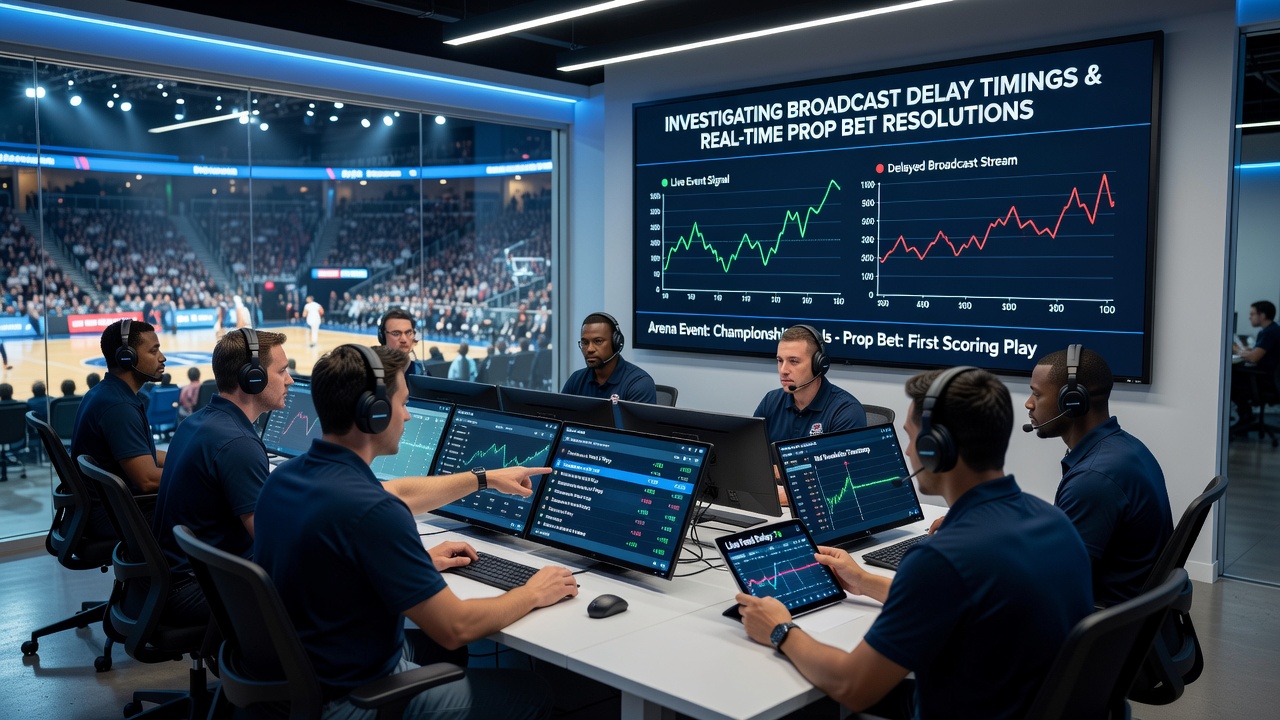
Broadcast signals from enclosed arenas rarely reach viewers at the exact moment an event unfolds, and this gap creates measurable effects on how sportsbooks settle in-play prop bets. Data from multiple U.S. state regulators shows average delays ranging between four and eight seconds for national television feeds, while arena-specific streaming services sometimes compress that window to under three seconds. Observers note that prop bets tied to single plays, such as “will the next shot be a three-pointer” or “will the next faceoff last longer than 30 seconds,” depend on precise timestamps that shift once the broadcast lag enters the equation.Mechanics of Signal Lag in Enclosed Venues
Arena productions route camera feeds through production trucks before satellite or fiber transmission begins, and each processing step adds incremental milliseconds that accumulate into full seconds by the time the signal arrives at home screens. Researchers at the University of Nevada, Las Vegas documented these layered delays across 142 NBA and NHL contests during the 2025-26 season, finding that fiber-optic backhauls from major arenas averaged 5.2 seconds while satellite uplinks stretched to 7.8 seconds in comparable venues. Those differences matter when a sportsbook’s automated settlement engine locks a prop outcome to the moment the play occurs rather than the moment it appears on the viewer’s screen.
Impact on Prop Bet Settlement Accuracy
Real-time prop markets resolve when the underlying event meets predefined criteria, yet the broadcast timestamp often serves as the de facto reference for bettors watching at home. When the delay exceeds the sportsbook’s internal buffer, a bettor may place a wager on an outcome that has already happened in the arena but remains invisible on the delayed feed. Figures released by the Nevada Gaming Control Board indicate that disputed prop resolutions involving timing discrepancies rose 14 percent year-over-year through the first five months of 2026, with arena basketball and hockey events accounting for the largest share. Sportsbooks have responded by inserting variable latency buffers that adjust according to the venue’s known broadcast characteristics, though these buffers still require constant recalibration when production trucks switch between satellite and fiber paths.
Case Examples from Major Arena Leagues
One documented instance occurred during a June 2026 NBA Finals game at the Chase Center in San Francisco, where the official broadcast carried a measured 6.4-second delay while the arena’s internal Wi-Fi stream operated at 2.1 seconds. Bettors using the faster stream submitted wagers on “next made free throw” that settled before the television audience saw the play, prompting several operators to issue manual adjustments. Similar patterns emerged in NHL playoff contests at Madison Square Garden, where the shorter fiber delay allowed certain prop markets to close seconds earlier than the national feed permitted. Industry reports compiled by the Canadian Gaming Association note that operators now maintain venue-specific delay tables updated weekly to reduce such mismatches.
Technological Adjustments and Regulatory Oversight
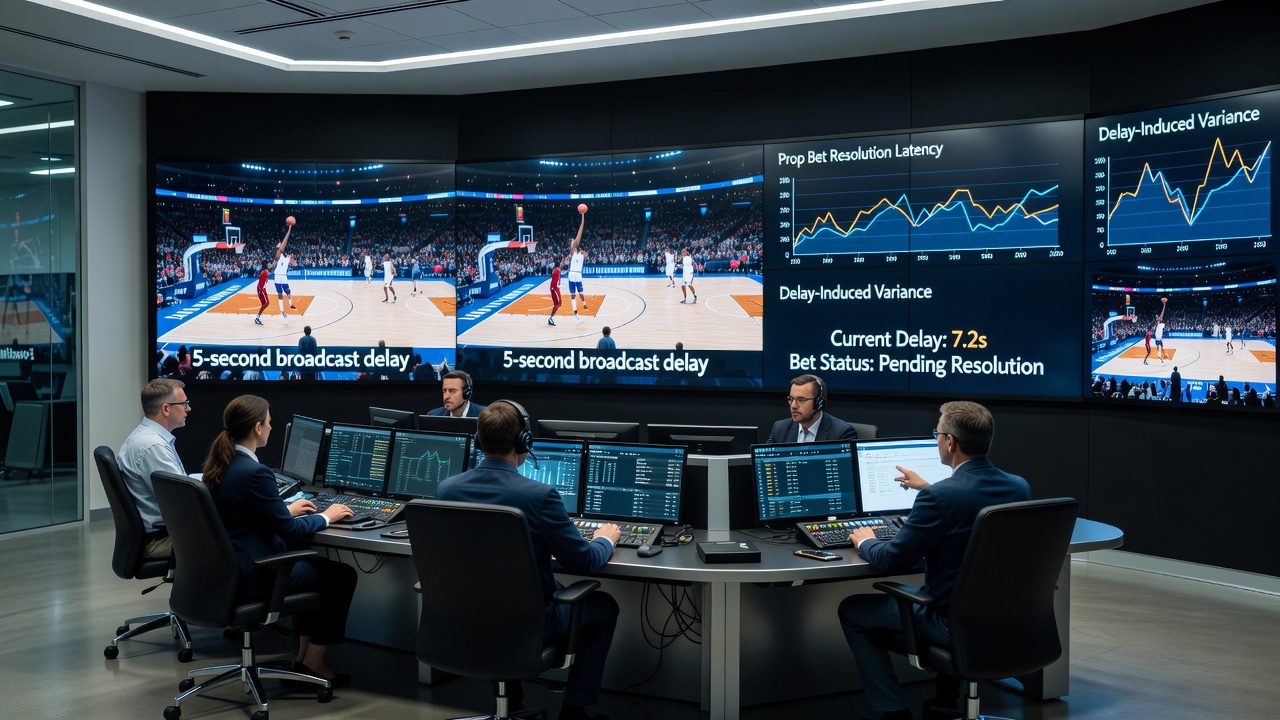
Operators increasingly rely on synchronized clock feeds from arena scoreboards rather than visual confirmation from the broadcast, yet this approach introduces its own variables when scoreboard clocks experience brief desyncs. A 2025 white paper published by the International Centre for Sports Studies examined 38 arena venues across North America and Europe and concluded that clock-based settlement reduced timing disputes by 27 percent compared with broadcast-dependent methods. State regulators have begun requiring operators to disclose their latency assumptions in quarterly filings, and data submitted through May 2026 shows most major sportsbooks now apply arena-specific offsets between 3.5 and 8.0 seconds depending on the venue and transmission method. These offsets appear in settlement logs that regulators review during routine audits, providing a traceable record when bettors file timing-related complaints.
Future Developments in Latency Management
Emerging 5G backhaul trials at several NBA arenas aim to shrink the delay window below two seconds, which would narrow the window in which prop bets can be placed after an event has already occurred. Early test data collected in March and April 2026 indicate that 5G feeds delivered average latencies of 1.8 seconds, though reliability varied during peak network loads. Should these trials scale, operators anticipate fewer manual interventions and tighter alignment between live action and televised settlement triggers. Regulatory bodies in multiple jurisdictions continue to monitor these technological shifts to ensure settlement protocols remain transparent and consistent across different broadcast platforms.
Conclusion
Broadcast delays remain an intrinsic feature of arena-based sports production, and their influence on real-time prop bet resolutions continues to evolve alongside transmission technology and regulatory requirements. Data collected through the first half of 2026 demonstrates that venue-specific latency tables, clock-based settlement, and emerging low-latency networks each play measurable roles in reducing timing discrepancies. As production methods advance, the gap between arena events and broadcast signals is expected to narrow further, yet operators and regulators alike maintain detailed records to preserve settlement integrity for all participants.