How Elevation Shifts Scoring Forecasts in Mountain Venue Athletic Events
Eden Powell · Jul 26, 2026
How Elevation Shifts Scoring Forecasts in Mountain Venue Athletic Events
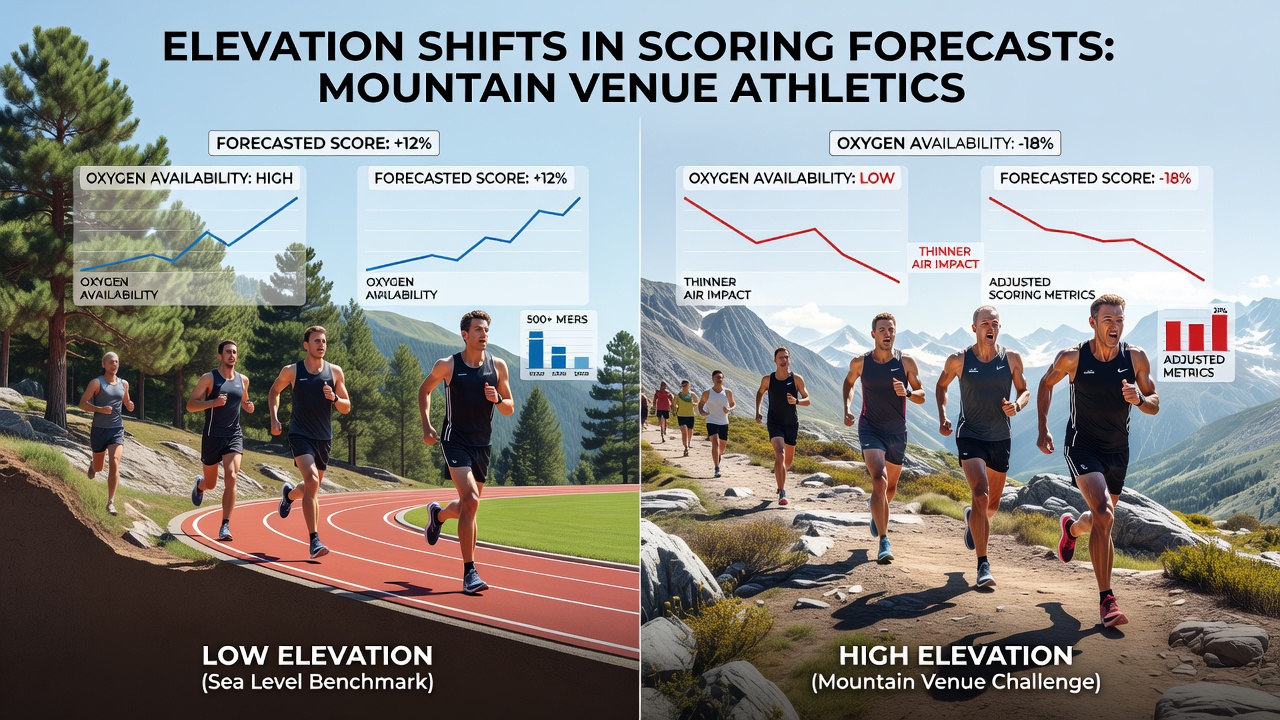
High-altitude venues alter athletic performance through reduced oxygen availability and lower air density, which in turn modifies scoring patterns that forecasters rely on when setting lines for events at sites like Denver's Empower Field or Andean soccer stadiums. Researchers tracking physiological responses note that athletes experience decreased aerobic capacity above 1,500 meters, while power-based actions such as throwing or striking gain from thinner air that reduces drag on balls and equipment. Data collected across multiple seasons shows these shifts produce measurable deviations in expected point totals, goal outputs, and race times, prompting adjustments in predictive models used by analysts.
Physiological Mechanisms at Play
Lower partial pressure of oxygen at elevation forces the body to work harder during sustained efforts, leading to quicker onset of fatigue in endurance disciplines, whereas explosive movements benefit from decreased resistance. Studies conducted by sports science teams at institutions including the University of Colorado have quantified these effects through controlled testing, revealing that VO2 max drops approximately 7 to 10 percent for every 1,000 meters gained in altitude for unacclimatized competitors. Meanwhile, projectile trajectories extend farther because the ball encounters less atmospheric drag, a factor documented in baseball and football metrics gathered at venues above 1,600 meters.
Acclimatization periods mitigate some impacts, yet most visiting teams arrive with limited preparation time, resulting in asymmetric performance gaps that appear consistently in historical game logs. Observers monitoring heart-rate data and blood-oxygen saturation levels during competitions note that home athletes often maintain steadier outputs, while visitors show steeper declines in the second halves of matches or later stages of races.
Impact on Different Sports
Team sports with continuous play, such as soccer and American football, display pronounced changes in total scoring when relocated to mountain locations. In soccer matches staged at elevations exceeding 2,500 meters, goal counts per game have averaged 0.4 to 0.8 higher than sea-level baselines according to aggregated league statistics, driven by longer passes and reduced defensive recovery speeds. Football data from Denver contests spanning two decades indicates passing yards per attempt rise by roughly 8 percent, yet rushing efficiency can dip because backs tire faster on repeated carries.
Individual endurance events follow a different pattern, with distance-running and cycling times lengthening measurably. Records from international meets held in the Alps and Rockies show marathon finish times extended by 2 to 4 percent compared with equivalent low-altitude courses, while sprint and field events record modest improvements due to enhanced takeoff velocities. These variances require forecasters to recalibrate expected-value calculations rather than apply uniform sea-level projections.
Forecast Adjustments and Historical Patterns
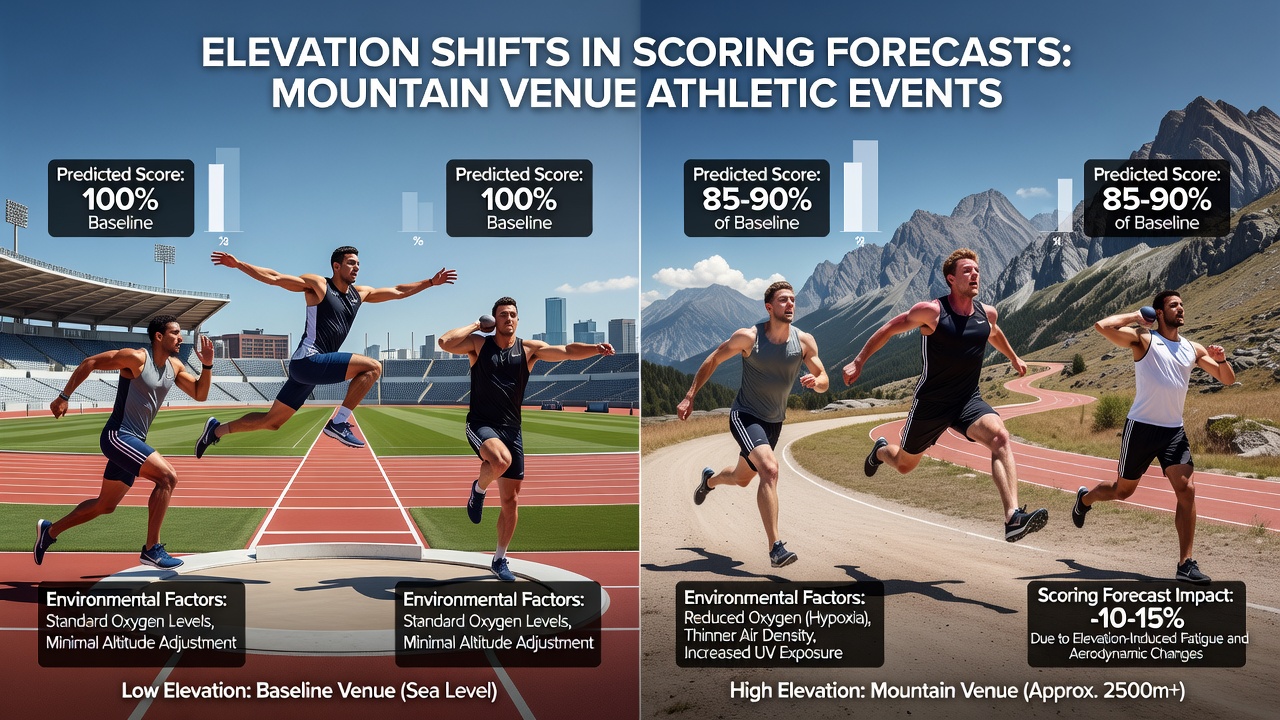
Betting models that incorporate elevation variables adjust totals downward for endurance-heavy contests and upward for those emphasizing aerial or striking elements. Analysts reviewing box scores from Colorado Rockies home games note that run totals climb an average of 1.2 runs per game relative to neutral-site expectations, a pattern tied directly to batted-ball distance increases at 1,600 meters. Similar recalibrations appear in NBA data when teams travel to Utah's higher venues, where three-point percentages edge higher because of reduced air resistance on long-range shots.
July 2026 brought renewed attention to these dynamics as several mountain-region tournaments released updated performance datasets. Organizers compiled metrics from multi-week events, confirming that visiting squads acclimated for fewer than five days posted win percentages 12 points below their season averages. Such figures feed directly into revised projection engines that now weight altitude as a primary input alongside travel distance and rest days.
Case Examples from Major Venues
Denver's professional teams provide the most extensive North American dataset, with decades of football, baseball, and hockey results available for comparison. Observers compiling these records find that visiting offenses in football average 22 more passing yards yet surrender 0.8 additional sacks per contest when playing at altitude. Baseball statistics reveal home-run rates elevated by 15 percent for both home and visiting clubs, flattening the distinction between park factors that normally favor one side.
International examples add further granularity. Soccer leagues in Bolivia and Ecuador maintain separate scoring benchmarks for highland versus lowland fixtures, with aggregate goal tallies rising steadily above 2,800 meters. Cycling stage races through the Pyrenees and Andes have produced time-gap expansions that exceed standard mountain-stage projections by 30 to 45 seconds per climb, forcing route planners and oddsmakers to revise intermediate checkpoints accordingly.
Conclusion
Elevation introduces consistent, quantifiable distortions into athletic scoring that propagate through forecasting systems used for mountain-venue events. Physiological data, venue-specific historical logs, and recent 2026 compilations all demonstrate that models must integrate altitude coefficients to maintain accuracy across sports. Continued collection of blood-oxygen and trajectory metrics will refine these adjustments as competitions return to high-elevation sites throughout subsequent seasons.