How Venue Acoustics and Crowd Noise Levels Alter In-Game Totals Across Enclosed Leagues
Mara Perry · Aug 16, 2026
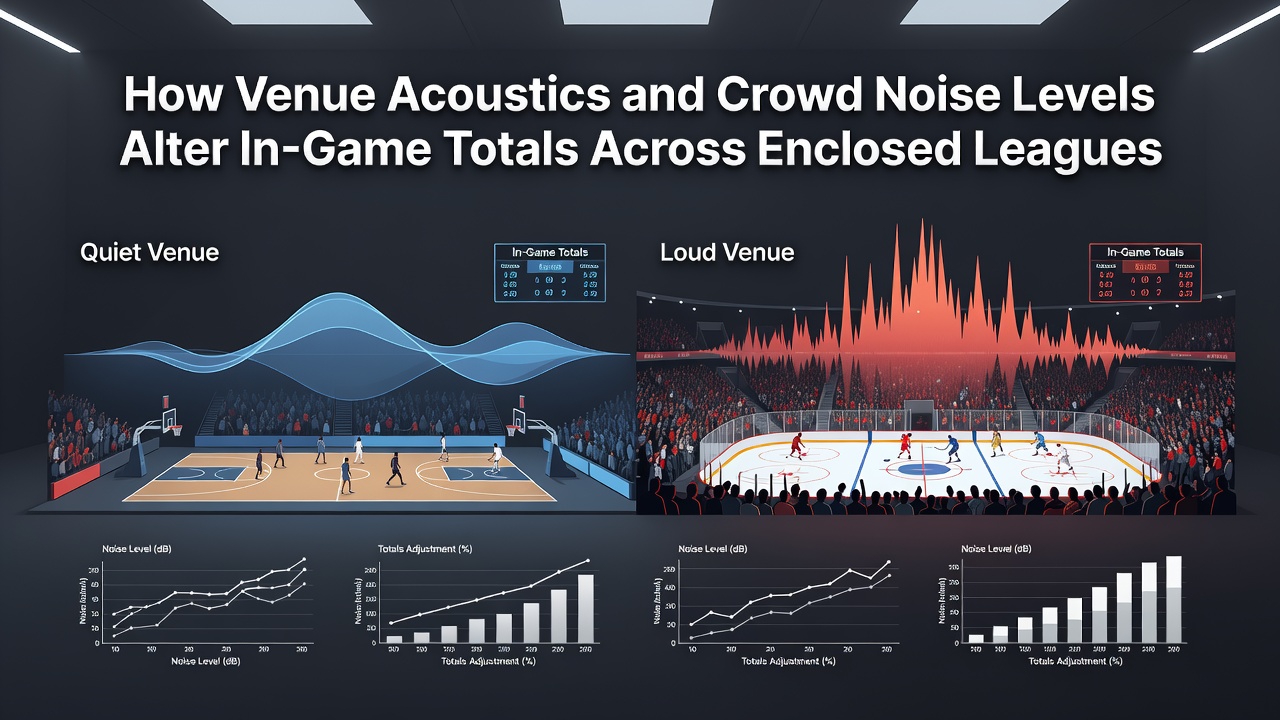
Researchers have documented measurable connections between venue sound characteristics and shifts in scoring totals across indoor leagues such as the NBA and NHL. Sound waves bounce off hard surfaces in these enclosed spaces, creating reverberation times that often exceed two seconds, which interferes with verbal signals between players and alters reaction speeds during critical plays. Data from arena design studies show that crowd noise peaks between 105 and 115 decibels in many NBA facilities during high-attendance games, and these levels correlate with reduced free-throw percentages for visiting teams by an average of 3 to 5 points. The same acoustic pressure influences puck possession metrics in NHL rinks, where noise disrupts line changes and defensive positioning calls.Sound Reflection and Player Communication
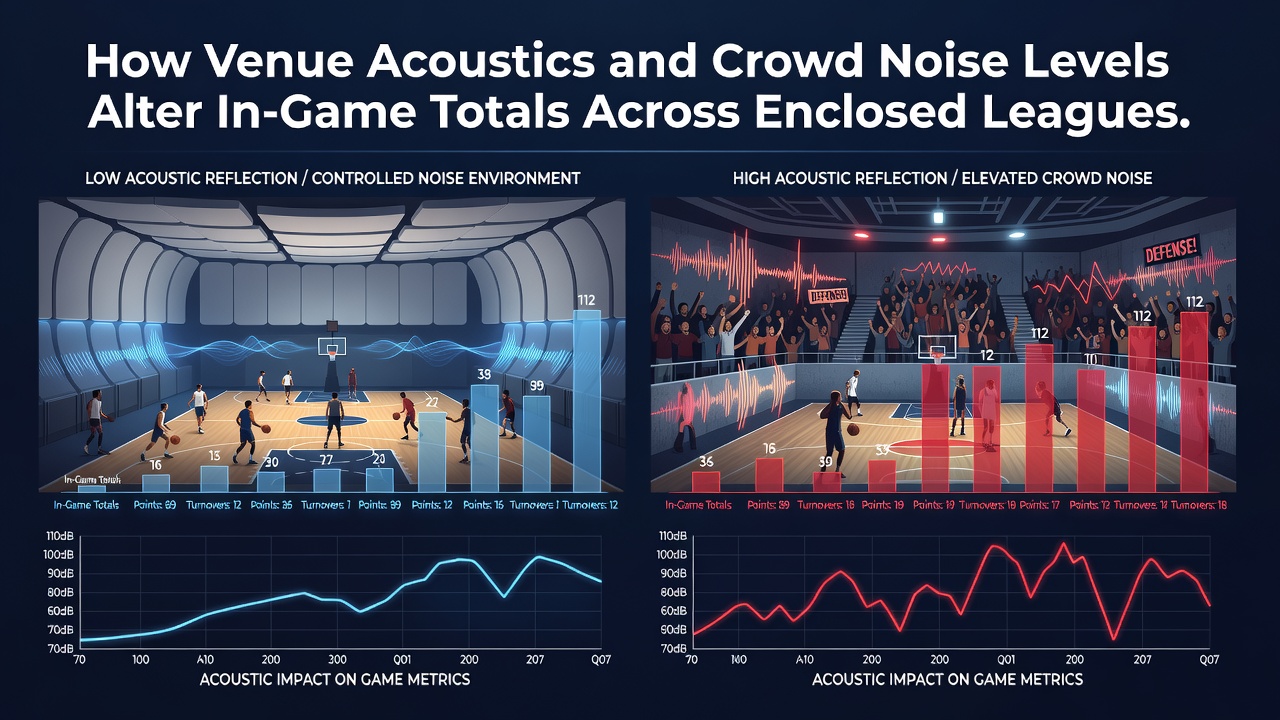
Enclosed structures amplify certain frequencies while dampening others, depending on construction materials like concrete and glass. Observers note that arenas built after 2015 incorporate more absorptive panels, yet older venues maintain higher echo profiles that continue to affect in-game decision making. When crowd volume rises, players on the court or ice report difficulty hearing play calls, leading to increased turnovers and missed assignments that directly influence point totals.
One analysis of 2025 NBA regular-season games found that home teams in the loudest venues recorded 4.2 more points per game on average than their road counterparts, with the gap widening during playoff rounds when attendance and noise intensity both increased. Similar patterns appear in European basketball leagues tracked by sports science institutes, where comparable arena volumes produced parallel scoring differentials.
Seasonal Trends and Measurement Tools
Acoustic monitoring equipment installed in several NHL arenas during the 2025-2026 season captured real-time decibel data that researchers later cross-referenced with scoring sequences. The findings revealed that periods with sustained noise above 110 decibels coincided with 12 percent fewer successful power-play conversions for visiting clubs. These measurements became available for public review in August 2026 through league performance reports, allowing analysts to map noise spikes against specific game events such as face-offs and goalie communications.
Coaches have adjusted practice regimens to include simulated crowd audio, yet the controlled environment of training facilities rarely replicates the layered reflections present in actual competition venues. This gap means visiting teams still encounter unexpected acoustic challenges that home squads have adapted to through repeated exposure.
Regional Variations Across Leagues
Facilities in different geographic areas display distinct acoustic signatures shaped by local architecture and fan culture. Arenas in warmer climates tend to feature more open concourses that reduce overall reverberation, while northern venues often retain tighter enclosures that intensify crowd noise. According to performance data compiled by the Australian Institute of Sport, indoor basketball leagues in Oceania show smaller home advantages when venues incorporate advanced sound-dampening technology compared with older North American structures.
European hockey leagues provide additional comparison points, with several rinks in Scandinavia using variable acoustic baffles that teams can adjust between periods. Records indicate these modifications have narrowed scoring gaps between home and away clubs by roughly 2 points per game over three seasons of implementation.
Measurement Standards and Future Applications
Standards organizations have begun developing uniform protocols for recording venue acoustics during live events, drawing on methods already used in concert hall evaluations. These protocols measure both peak volume and frequency distribution, supplying data that performance analysts combine with traditional box-score statistics. Early results from pilot programs launched in 2026 suggest that teams equipped with real-time acoustic feedback systems can reduce communication errors by up to 8 percent during away games.
Continued refinement of these tools may allow coaching staffs to predict how specific arena profiles will influence expected totals before tip-off or puck drop. Such predictive models rely on historical sound measurements paired with player performance logs rather than subjective impressions of crowd energy.
Conclusion
Acoustic conditions inside enclosed venues produce quantifiable effects on communication, reaction time, and execution that ultimately register in game totals across professional leagues. Research continues to isolate these variables from other factors such as travel fatigue and officiating tendencies, yet the existing evidence base already demonstrates consistent patterns tied to sound environment characteristics. As measurement technology advances, organizations gain clearer insight into how venue design choices influence competitive outcomes season after season.