How Wearable Sensor Data Is Quietly Reshaping Prop Bet Structures Across Professional Athletic Leagues
Morgan Werner · Jul 21, 2026
How Wearable Sensor Data Is Quietly Reshaping Prop Bet Structures Across Professional Athletic Leagues
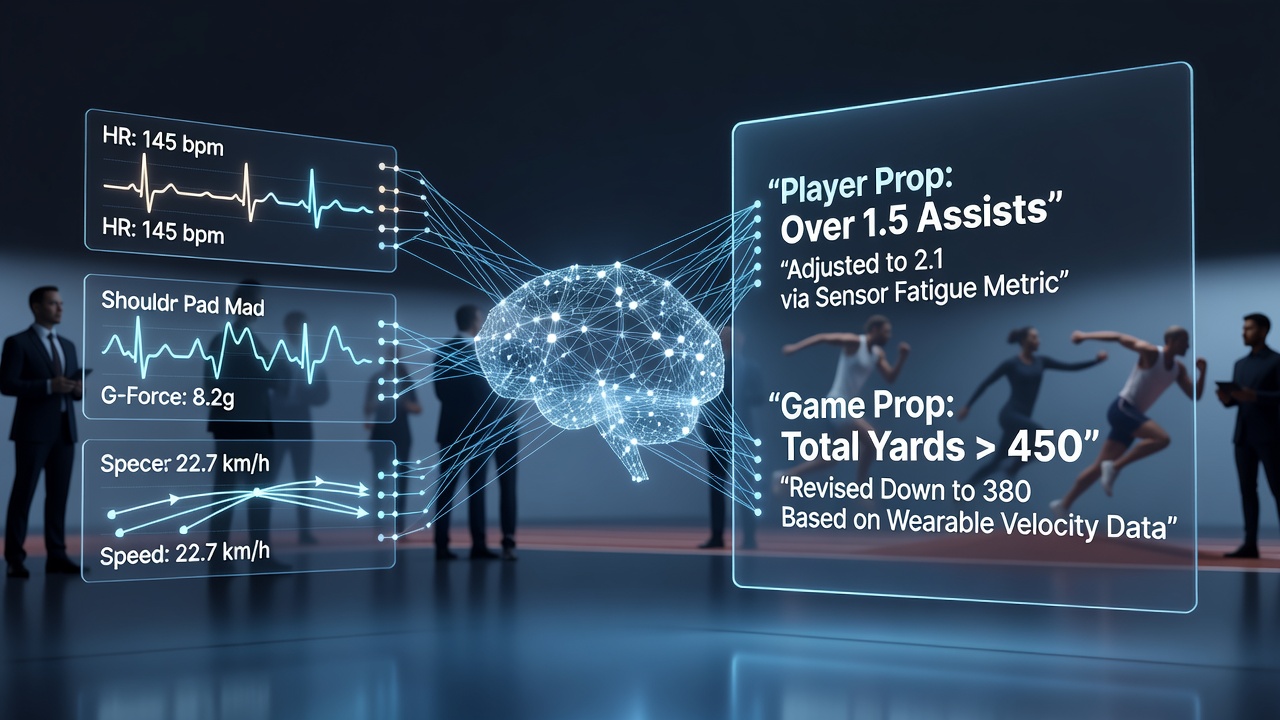
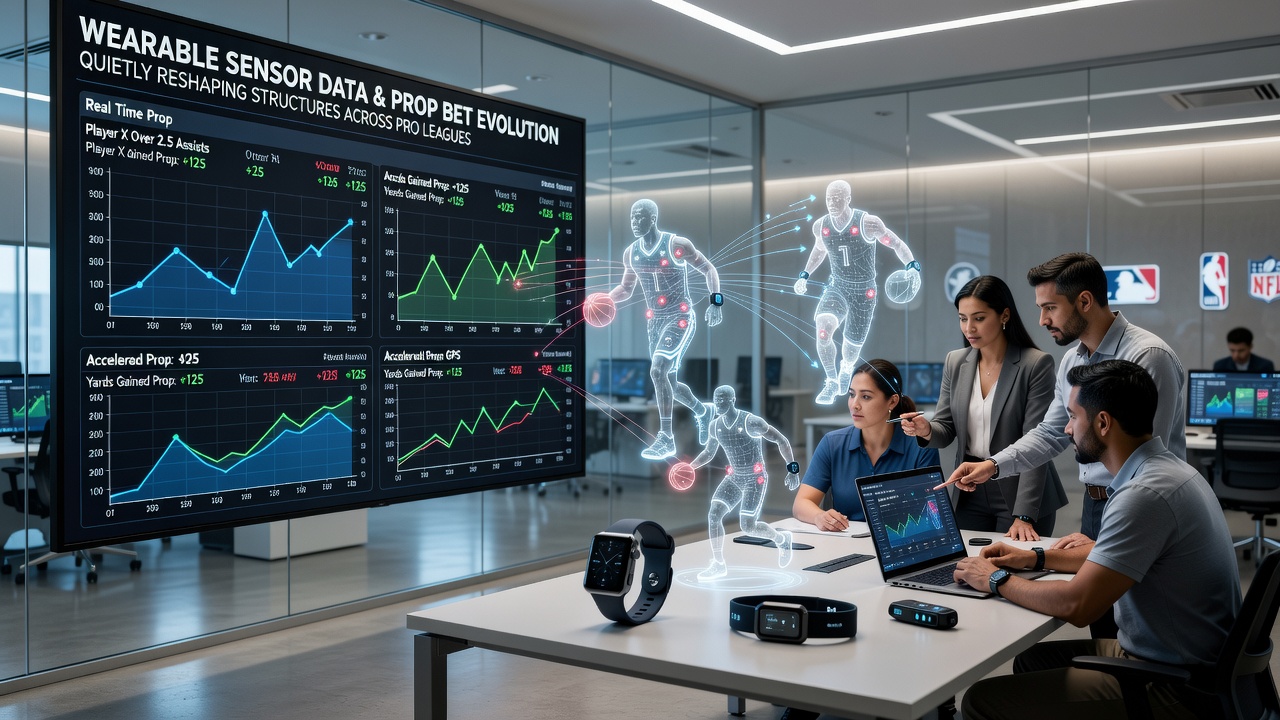
Professional sports leagues have integrated wearable sensors into training and game environments for several years, and this technology now supplies detailed biometric and movement data that influences how prop bets are structured and priced. Leagues such as the NFL, NBA, and MLB collect information on player workload, acceleration patterns, heart rate variability, and recovery metrics through devices approved for official use, and sportsbooks have begun incorporating aggregated versions of these datasets into their risk models for player-specific wagers.
Expansion of Sensor Deployment Across Leagues
By July 2026 the NFL had expanded its Next Gen Stats program to include additional biometric channels from chest-worn sensors, while the NBA continued to refine its league-wide player tracking system that combines optical cameras with wearable accelerometers. MLB teams received permission to use forearm-based units during spring training sessions, and these feeds contributed to internal performance dashboards that later appeared in anonymized summaries shared with analytics partners. Data volumes grew steadily as a result, with each contest generating thousands of data points per athlete that cover both explosive movements and sustained effort levels.
Adjustments to Prop Bet Offerings and Pricing
Prop bet markets have responded by narrowing certain player prop lines and introducing new categories tied directly to measurable physical outputs. Sportsbooks now offer wagers on metrics such as maximum sprint speed achieved in a quarter or total high-intensity distance covered, categories that rely on sensor validation rather than traditional box-score statistics. Odds compilers adjust thresholds in real time when pre-game sensor data indicates elevated or reduced workload from recent matches, and this practice has become more pronounced in sports with dense schedules like the NBA.
One mid-season study released by a university sports analytics group showed that prop bets incorporating sensor-derived fatigue indicators produced lower hold percentages for operators compared with traditional volume-based props, prompting several major books to recalibrate their margins on those specific lines. The shift has also led to the creation of live prop options that update after each quarter based on cumulative sensor readings, a format that was piloted in select NBA markets during the 2025-26 season.
Role of Data Aggregators and League Partnerships
Third-party data providers have signed agreements with leagues to distribute sanitized sensor outputs to licensed operators, and these feeds arrive with standardized latency windows that prevent any single participant from gaining an information edge. The NBA and NFL both require that raw files remain behind league-controlled firewalls for a set period, after which summary statistics become available for betting model calibration. European regulatory bodies, including the Malta Gaming Authority, have issued guidance requiring operators to document how external data sources affect prop pricing, a standard that several U.S. state commissions have begun to reference in their own oversight frameworks.
Regulatory and Integrity Considerations
State gaming regulators have examined whether sensor data access creates new categories of material non-public information. In early 2026 the New Jersey Division of Gaming Enforcement requested detailed logs from operators detailing any changes to prop lines that followed the release of league-approved sensor summaries. Similar inquiries appeared in Pennsylvania and Colorado, where commissions asked operators to demonstrate that line movements tied to sensor data do not disproportionately favor sophisticated bettors who subscribe to premium analytics services. Industry associations such as the American Gaming Association have published best-practice documents that outline minimum disclosure standards for data sources used in prop construction.
Emerging Prop Categories and Market Examples
New prop types have entered betting menus in several jurisdictions. Operators in Illinois and Maryland began listing wagers on estimated total player load measured in arbitrary workload units derived from sensor fusion algorithms, while Canadian provincial operators introduced similar offerings for NHL games after receiving data-sharing approvals from the league. Observers note that these categories attract lower betting volume than traditional points or yards props yet exhibit distinct correlation patterns that allow operators to balance their overall book exposure across correlated player markets.
Academic researchers have published preliminary findings indicating that sensor-informed props display different variance profiles compared with box-score props, particularly in high-minute athletes who participate in back-to-back games. These studies rely on publicly released league datasets rather than proprietary sportsbook records, and they provide operators with independent benchmarks for setting limits and monitoring sharp action.
Conclusion
Wearable sensor data continues to supply professional leagues and their data partners with granular performance measurements that gradually migrate into the construction and adjustment of prop betting markets. As more leagues formalize data distribution protocols and regulators refine disclosure requirements, the structure of available prop wagers is expected to incorporate additional sensor-derived categories while maintaining compliance with existing integrity standards. The process remains incremental, driven by the steady accumulation of validated datasets and the ongoing calibration of risk models used by operators across multiple jurisdictions.