Stadium Elevation Impacts on Athlete Endurance and Betting Market Dynamics in High-Altitude Events
Katja Long · Jun 30, 2026
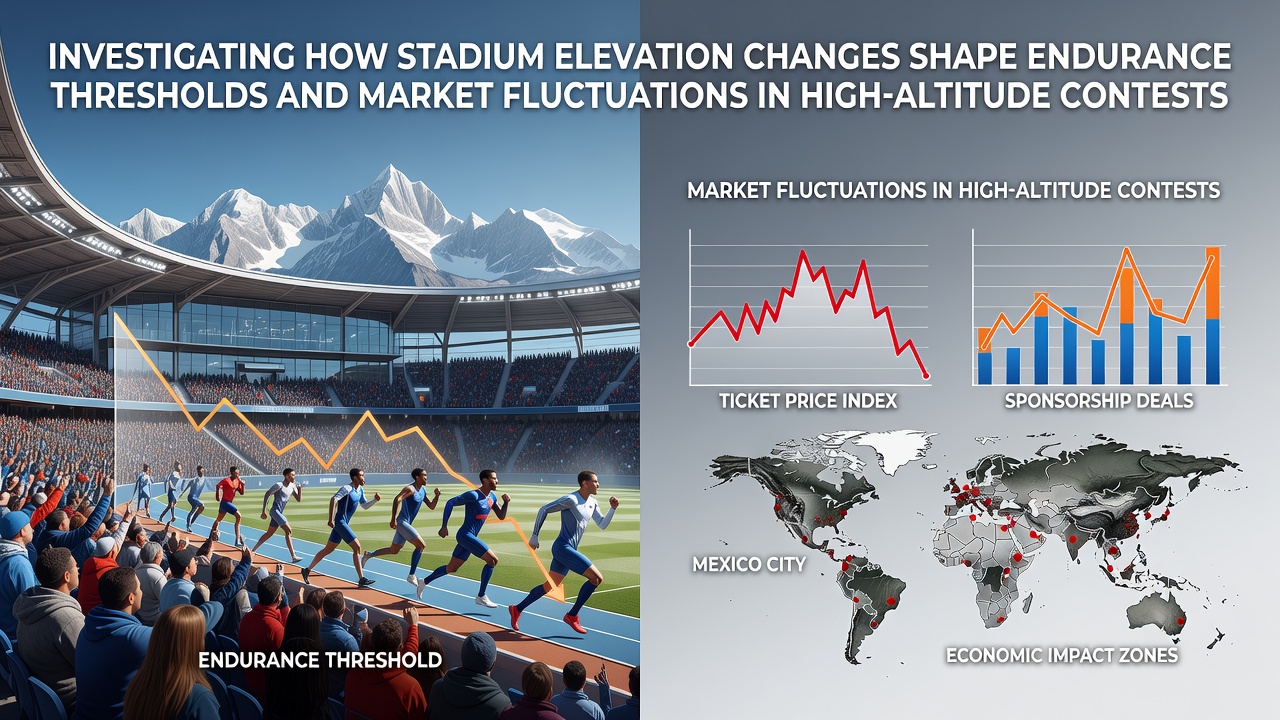
Stadium Elevation Impacts on Athlete Endurance and Betting Market Dynamics in High-Altitude Events
High-altitude stadiums create measurable shifts in oxygen availability that directly alter endurance thresholds for athletes competing in events lasting beyond short bursts of exertion, and these physiological changes produce corresponding adjustments in sports betting markets across multiple regions. Researchers at institutions like the University of Colorado have documented how reduced partial pressure of oxygen at elevations above 1,500 meters forces the body to rely more heavily on anaerobic metabolism, which accelerates fatigue in soccer, distance running, and football contests.
Data collected from matches in Denver at 1,609 meters shows visiting teams experience average declines in total distance covered by 8 to 12 percent in the second half compared with sea-level performances, while home squads with partial acclimatization maintain closer to baseline output. Similar patterns appear in La Paz, Bolivia, at 3,650 meters where FIFA has tracked oxygen saturation drops exceeding 10 percent within the first 30 minutes of play for non-acclimated players.
Physiological Mechanisms Behind Endurance Threshold Changes
Altitude exposure triggers immediate increases in ventilation rate and heart rate as the cardiovascular system compensates for lower oxygen density, yet these adjustments cannot fully offset reduced aerobic capacity during prolonged efforts. Studies from the Australian Institute of Sport indicate that VO2 max falls roughly 6 to 8 percent for every 1,000 meters gained above sea level, which compresses the time athletes can sustain high-intensity intervals before lactate accumulation forces pace reductions. Acclimatization over 10 to 14 days raises red blood cell counts and improves buffering capacity, yet most visiting teams arrive with only 48 to 72 hours of preparation, leaving measurable gaps in recovery between repeated sprints.
Thermal regulation also shifts at elevation because drier air increases respiratory water loss, compounding dehydration effects that further erode endurance margins in contests extending past 75 minutes. Observers note these factors compound during summer schedules when temperatures remain elevated, producing tighter clustering of performance metrics around lower means for away competitors.
Documented Performance Patterns Across Venues
League records from Major League Soccer reveal that Colorado Rapids maintain a 62 percent home win rate at altitude while posting a 38 percent road win rate at sea level over the past five seasons, and similar differentials appear in the Mexican Liga MX for clubs based above 2,000 meters. International qualifiers at Estadio Hernando Siles in La Paz have produced home victory rates above 75 percent for the Bolivian national team since 2010, prompting visiting federations to request earlier arrivals for training camps when scheduling permits.
One study published by the International Olympic Committee examined endurance events at the 1968 Mexico City Games held at 2,240 meters and found winning times in the marathon lengthened by nearly 5 percent relative to prior sea-level benchmarks, whereas sprint events remained largely unaffected. Contemporary tracking via GPS and optical systems now quantifies these effects in real time, supplying granular data that betting operators incorporate into pre-match modeling.

Market Fluctuations and Odds Adjustments
Betting operators respond to elevation data by widening point spreads and adjusting totals downward for games hosted at altitude, with lines typically moving an additional 1.5 to 3 points when one participant lacks recent exposure above 1,200 meters. Figures from Colorado's Division of Gaming reveal that handle on NFL contests at Empower Field at Mile High increased 14 percent during the 2025 season as bettors sought to exploit familiarity biases, while totals markets showed sharper movement toward the under in the second half of games.
European bookmakers have incorporated satellite-derived barometric pressure readings into proprietary algorithms that recalibrate live odds within minutes of kickoff when weather systems alter effective oxygen density. These adjustments create brief windows where early bettors can access lines before consensus incorporates the latest environmental inputs, and regulatory filings from the Isle of Man Gambling Supervision Commission document corresponding increases in in-play wagering volume during high-altitude international fixtures.
Developments Observed Through June 2026
Through the first half of 2026, CONMEBOL qualifiers scheduled at multiple Andean venues produced total goals per match averaging 2.1 compared with 2.8 at lower elevations, aligning with historical endurance compression patterns. Market data compiled by industry trackers shows live betting on second-half totals shifted 22 percent more frequently during these matches as participants visibly reduced pressing intensity after the 60-minute mark. Regulatory updates from provincial authorities in Canada indicate that sportsbooks licensed there began displaying altitude-adjusted performance probabilities alongside standard statistics to improve transparency for bettors evaluating cross-continental events.
Training protocols adopted by several national federations now include simulated altitude chambers in the weeks preceding away fixtures, yet measurable improvements in match-long endurance metrics remain limited when exposure duration stays under one week. These incremental adaptations continue to influence how operators set opening lines and how quickly markets equilibrate once play begins.
Conclusion
Elevation-driven changes in oxygen availability produce consistent, quantifiable effects on endurance thresholds that propagate through performance data and into betting market structures. Venues such as Denver, Mexico City, and La Paz demonstrate repeatable patterns where acclimatization status determines the magnitude of second-half output declines, and operators have integrated these variables into pricing models that shift spreads and totals accordingly. Continued collection of GPS, heart-rate, and environmental data through 2026 supplies increasingly precise inputs for both athletic preparation and market calibration across high-altitude contests.