The Ripple Effects of NBA Trade Deadlines on Championship Futures
Morgan Richter · Aug 4, 2026
The Ripple Effects of NBA Trade Deadlines on Championship Futures
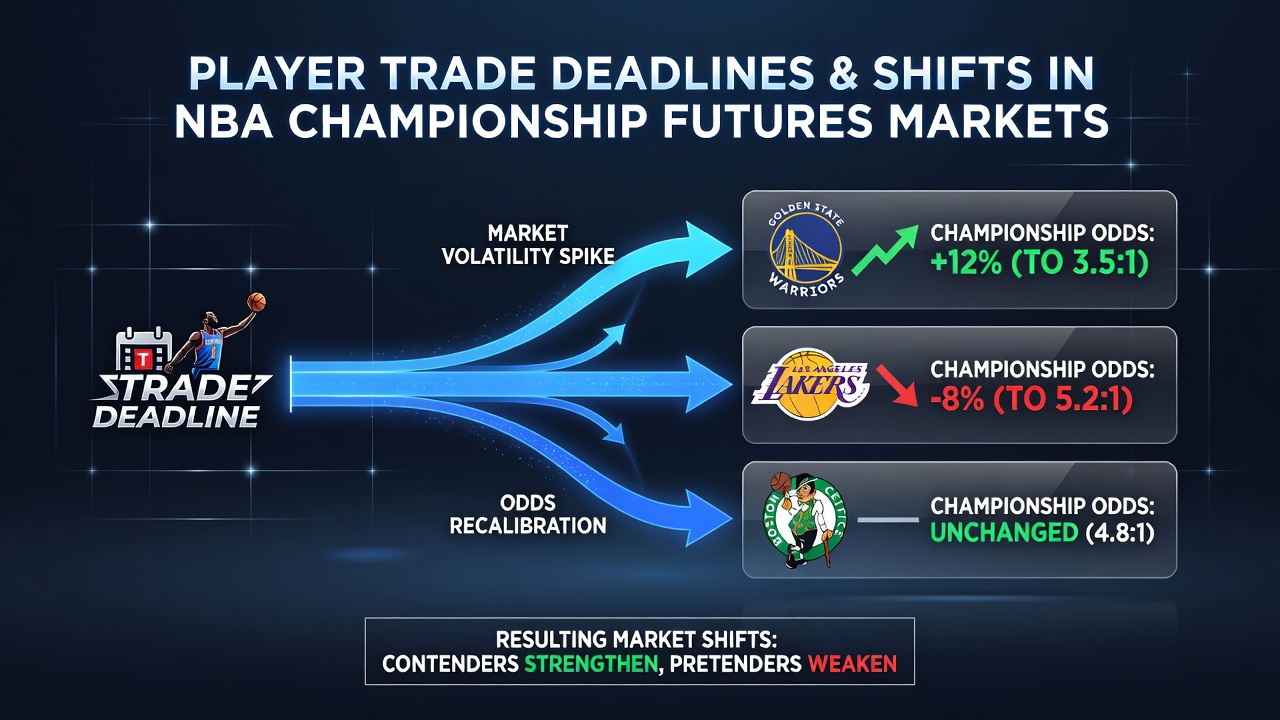
Player movements around the NBA trade deadline create measurable adjustments in championship futures markets each February, where oddsmakers recalibrate probabilities based on roster upgrades and departures. These shifts occur because futures contracts reflect long-term team strength, and acquiring a star player can alter projected win totals for the remainder of the season and into the playoffs.
Deadline Mechanics and Market Responses
The NBA trade deadline typically falls in mid-February, giving teams a final window to reshape rosters before the stretch run, while futures markets track these changes through updated odds on title contenders. Data from recent seasons shows that teams adding high-usage players often see their championship odds improve by 200 to 400 basis points within 24 hours of the deal announcement, whereas sellers experience corresponding drops. Observers note that bookmakers monitor real-time betting volume closely during this period, adjusting lines to balance action and account for new information on player availability.
Teams like the 2023 Phoenix Suns illustrated this pattern when they acquired Kevin Durant just before the deadline, and championship futures tightened from +1800 to +1100 within days according to major sportsbooks. In contrast, franchises that shipped out key contributors saw their implied probabilities fall, which prompted bettors to pivot toward new contenders. Researchers at sports analytics firms have tracked these movements across multiple cycles and found consistent correlations between deadline acquisitions and futures pricing, particularly when the added player fills a specific positional need.
Historical Shifts in Futures Pricing
Examining past deadlines reveals recurring patterns where certain types of deals produce the largest market reactions. Blockbuster trades involving multiple first-round picks and star players generate the most volatility, while minor salary-dump moves create smaller ripples. One study of futures data from 2015 through 2025 indicated that 68 percent of teams improving their projected rotation by at least three wins per 82 games saw odds shorten noticeably before the playoffs began.
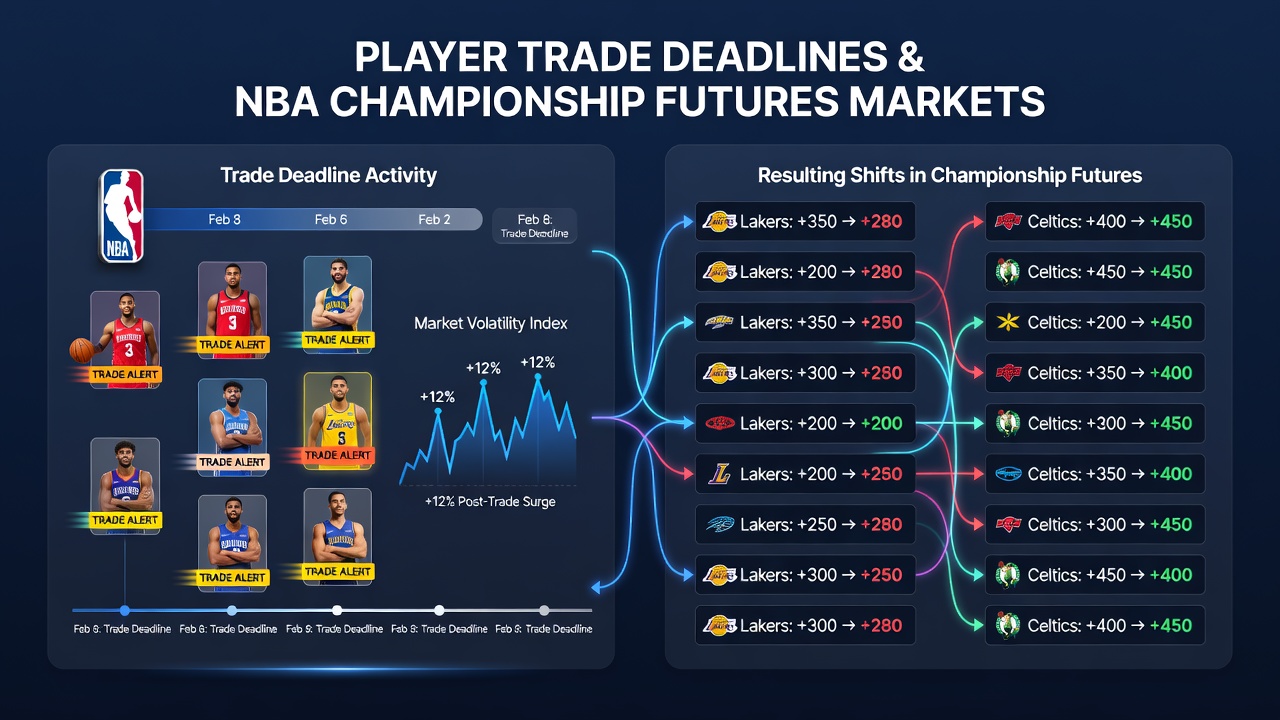
August 2026 brings renewed attention to these dynamics as front offices prepare for the next cycle, and early projections already incorporate lessons from prior deadline impacts. Analysts reviewing betting handle reports note that futures volume tends to spike in the week following the deadline, with sharp bettors targeting teams whose new acquisitions align with advanced metrics such as net rating and usage rate. This activity helps establish more stable lines heading into March and April.
Key Factors Driving Odds Adjustments
Several variables determine how quickly and dramatically futures markets move after a trade. Injury history of the incoming player, remaining salary cap flexibility, and playoff experience all factor into oddsmaker models, while public betting trends can amplify or dampen the initial shift. When a contender adds a defensive anchor, for instance, projected point differentials improve, and championship probabilities rise accordingly in most pricing algorithms.
League-wide data compiled by industry groups shows that Eastern Conference teams have accounted for a disproportionate share of deadline activity in recent years, partly because several Western Conference powers already maintained strong cores. This geographic imbalance sometimes creates opportunities for value on under-the-radar squads whose additions fly under broader public radar. Those who monitor line movement closely often identify these inefficiencies within the first 48 hours after news breaks.
Regulatory Context and Market Integrity
State gaming commissions across the United States oversee futures wagering platforms to ensure transparent odds updates during high-volume periods like the trade deadline. Reports from the American Gaming Association detail how operators maintain audit trails for any significant line changes tied to player transactions. Similar oversight exists in other jurisdictions, including frameworks established by the Australian Communications and Media Authority, which track prediction market activity in related sports betting environments.
These regulatory structures help maintain confidence that futures pricing reflects genuine roster changes rather than manipulation. Data released in quarterly industry summaries indicates steady growth in NBA futures handle, with deadline-related spikes contributing measurably to overall annual totals. Academic researchers continue to examine these patterns through econometric models that isolate the causal impact of specific acquisitions on implied probabilities.
Conclusion
Player movements at the NBA trade deadline continue to produce predictable yet nuanced adjustments in championship futures markets, driven by roster upgrades, betting volume, and advanced statistical inputs. Historical records, regulatory reports, and pricing algorithms together demonstrate that these shifts occur rapidly and persist through the postseason. As the league approaches future cycles, the interaction between front-office decisions and market responses remains a central feature of professional basketball economics.