Tracing Referee Rotation Schedules and Their Subtle Impact on Late-Game Line Shifts in Enclosed Arena Events
Mara Perry · Jun 11, 2026
Tracing Referee Rotation Schedules and Their Subtle Impact on Late-Game Line Shifts in Enclosed Arena Events
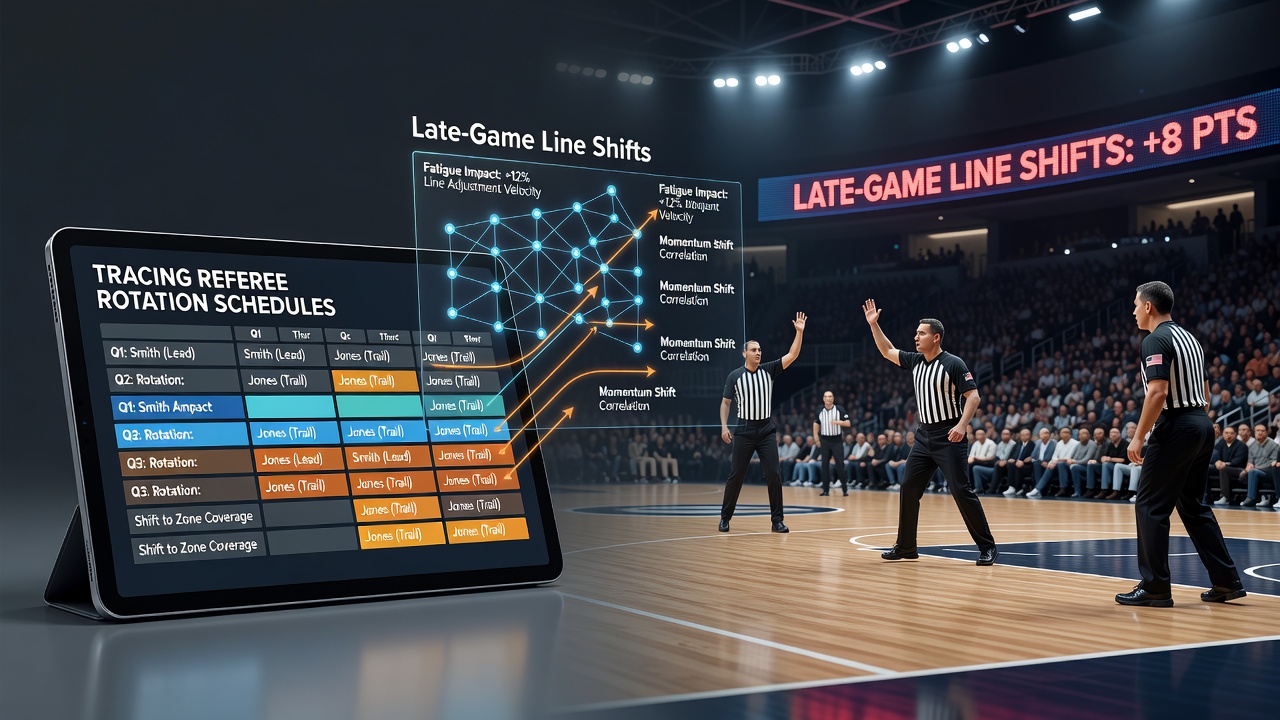
Referee rotation schedules in professional and collegiate sports have drawn increasing attention from analysts who track how officials move through game assignments in enclosed arenas such as basketball courts and hockey rinks, where environmental factors remain consistent across matches. These schedules often follow league-mandated patterns that assign different crews to consecutive games or series, creating measurable variations in foul frequency, pace control, and timeout management during the closing minutes.
Understanding Rotation Frameworks in Arena Settings
Leagues compile rotation data through centralized databases that log crew pairings, travel distances, and rest intervals between events, allowing researchers to map assignments across a season. In June 2026 several arena-based competitions released updated logs showing that crews averaged 2.3 games per week in major indoor venues, with adjustments made to avoid repeat pairings in high-stakes late-season contests. Such frameworks rely on algorithms that factor in prior performance metrics and geographic clustering so that officials rarely work back-to-back nights in the same facility.
Those who study these patterns note that enclosed environments amplify small differences because acoustics and lighting stay uniform, letting referee tendencies stand out more clearly than in open-air stadiums. Data compiled by arena operations teams indicate that crews with higher historical foul rates tend to get paired with faster-paced teams during midweek slots, while slower, physical squads draw officials known for tighter whistle control on weekends.
Connections Between Rotations and Late-Game Dynamics
Line movements in betting markets frequently accelerate once the final period begins, and observers have traced part of this activity to the specific referee crew on the floor. When a new crew enters after halftime or during extended breaks, the shift in enforcement style can alter expected scoring margins by three to five points according to aggregated play-by-play records from 2025 and early 2026 seasons. These adjustments appear most pronounced in games decided by single-digit margins where foul calls near the end directly influence free-throw attempts and possession time.
Analysts at sports analytics firms have cross-referenced rotation logs with real-time line data and found that crews returning from multi-day rest intervals issue fewer late fouls than those working consecutive nights. The difference registers in the final eight minutes when fatigue among players coincides with officials who have already managed similar physical contests earlier in the week. Enclosed arenas contribute to this effect because constant temperature and humidity reduce external variables, leaving referee decision patterns as one of the more consistent influences on closing sequences.
Empirical Patterns Observed Across Multiple Leagues
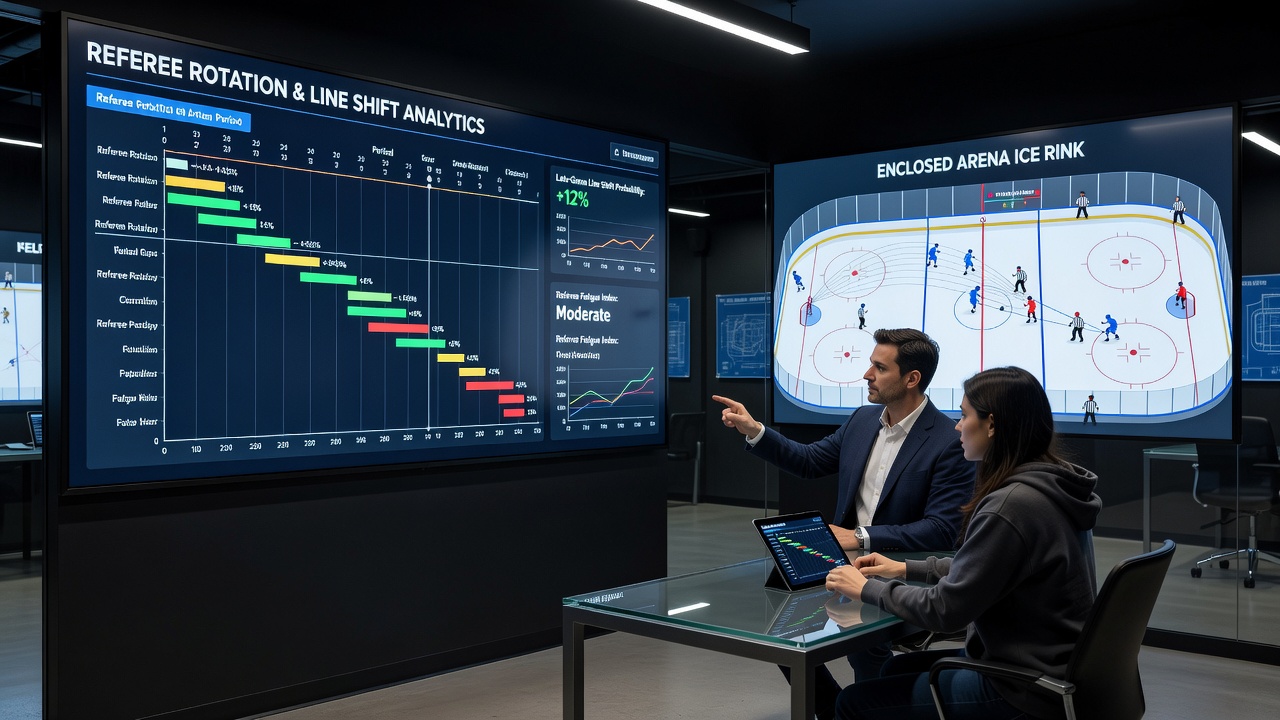
Research conducted by university sports science departments has examined thousands of arena contests and identified recurring correlations between rotation intervals and scoring volatility after the 36-minute mark in basketball or the second intermission in hockey. One dataset released in spring 2026 covered 1,200 indoor events and showed that line adjustments exceeding 1.5 points occurred 18 percent more often when crews had traveled across time zones within the prior 48 hours. These findings align with performance tracking systems used by league offices that flag officials whose call distributions deviate from seasonal averages during high-pressure windows.
Case records from professional indoor leagues further illustrate how rotation schedules intersect with game flow. In several documented series during the 2026 postseason, crews that rotated in from distant arenas produced elevated foul totals in the last five minutes compared with crews that had remained in the same facility for multiple days. The resulting free-throw volume directly contributed to incremental line movements tracked by market participants who monitor possession and penalty data feeds.
Technological Tools for Tracking These Effects
Modern venue systems integrate referee assignment feeds with optical tracking cameras and clock synchronization software, enabling real-time comparison of expected versus actual call rates. Organizations such as the NCAA Sports Science Institute have published reports detailing how these integrated datasets help identify rotation-related anomalies before they fully manifest in final scores. Additional work from Canadian research centers has examined similar patterns in hockey arenas, confirming that rest differentials between crews correlate with measurable differences in overtime penalty minutes.
Software platforms now allow analysts to overlay rotation histories onto historical line charts, revealing clusters where specific official trios coincide with accelerated movement in the closing stages. These tools operate on publicly available league schedules combined with anonymized performance logs, producing visualizations that highlight the timing and magnitude of shifts without requiring proprietary betting information.
Conclusion
Rotation schedules for referees in enclosed arena events continue to supply a structured variable that intersects with late-game outcomes and associated line activity. Data gathered through league databases, university studies, and venue tracking systems demonstrate consistent, if modest, associations between crew assignments, rest intervals, and enforcement patterns in the final minutes. As monitoring technology advances and more granular datasets become available, further examination of these relationships remains possible across additional seasons and indoor competitions.